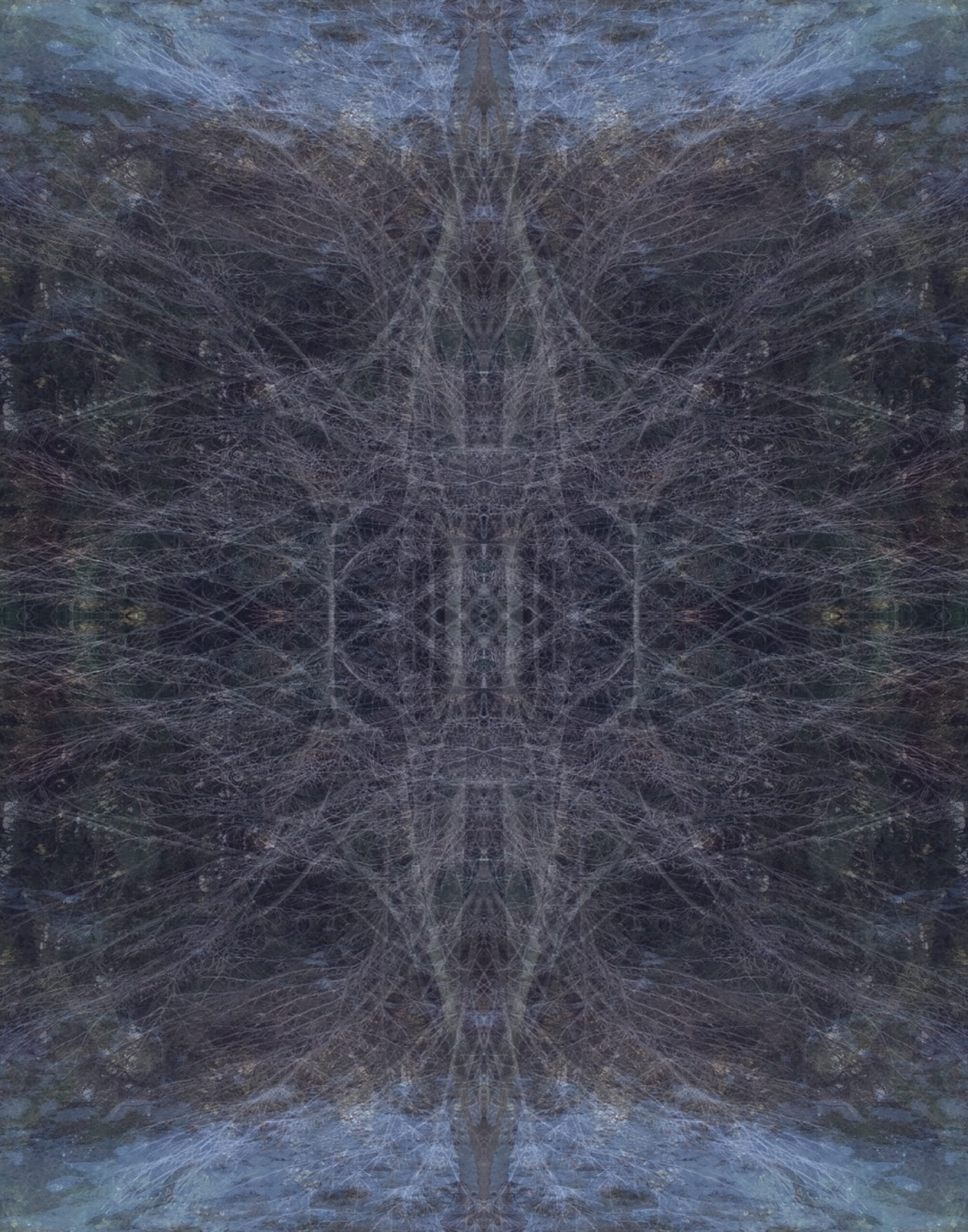
So What

By Charles Jacobson

There's a new statue of Miles Davis outside Marilyn's Bar in downtown Alton, an old river town twenty miles north of St. Louis. Arlene, me and 300 others were awaiting the reveal on a cool October afternoon. After the dedication, it was time for Arlene to pursue her instincts:

“When was his birthday?”

“May 26, 1926.”

“Five plus two and six, a thirteen—one and three, he's a four. A box has four sides. He's feeling confined.”

A raspy whisper floated through the air. “What’s that, man? I'm not in a box.”

Arlene turned. “Oh, hi Miles. You’re late or we're early.”

“Ghosts are always late. They come so quiet, you never hear them.”

“I love your indigo and turquoise brocade frock and stunna shades.”

Was he here through the miracle of cryopreservation? He didn't smell bad.

Miles raised his ghostly voice. “May 25th, dammit!”

Someone screamed. The crowd fell back. Arlene recalculated. “That's five plus two and five, a twelve—you're a three. I'm a three! We're both threes. Ella’s a three.”

“Ella sings like someone’s standing on her feet.”

“One plus nine plus eight; thirty. A seven of clubs like Bill Clinton. You have a strong sense of creativity and self-expression, a worldly entertainer. When hurt, you retreat into a shell for extended periods.”

“That's right. Sometimes I wake up and I don't know where I am. I don't talk to nobody.”

“You have two fives; lots of five energy. You have issues with your past but you explore the future without fear. 'Five' is an 'f'—flight, fear, fantasy.”

“I haven’t understood a mother-fuckin’ word. I'm a six, a perfect six, and six is the number of the Devil. I have a lot of the devil in me.”

Off came the tarp on the sinewy statue. The crowd was creeping back. Miles lifted his shades. He limped over to the imposing bronze work and glared at Preston Jackson, the sculptor.

Jackson stepped aside: “I didn’t get you right?”

“Who the hell you think you're looking at? I'm five-eight. Does it stand? I always did.”

“Had to balance. 'S' curve. Praxiteles. You dig?”

“No tea, no shade.”

“The drapery is carved with meticulous delicacy,” I added.

Miles stared at Arlene. “That white boy with you?”

“Yeah—”

“I was gonna choke him nice and slow, but now I'll let him go. I didn't come here to rescue him from you. I came here to rescue you from him. Why don't you come back with me?”

“Arlene! Miles is dangerous!”

Her eyes glittered, her breathing loud.

“What’s wrong?”

Her features began to waste, a terrible smile came to her lips: “Don’t touch me,” she said in the most remarkable rumbling low noises.

“No!”

Miles tapped his cane on the street. “Gotta dip. When I say later, I mean later!”

I reached across the dark space for her former self.

She was Miles away.

About the Author

Charles Jacobson has an abiding interest in philosophy and the arts, and lives across the river from St. Louis in Alton, Illinois, with a cat who doesn't like him. His stories and poems have appeared in over twenty publications, radio and Story Collider.
He Was Leo

By Toshiya Kamei

The first hair was a secret. A single, dark strand, wiry and defiant, sprouting below his jawline. Leo found it by accident, his fingers tracing the new, sharper angle of his face in the bathroom mirror. A jolt, pure and electric, shot through him. It was real. This was real. He was real.

He leaned closer, fogging the glass with his breath. It wasn’t much, just one tiny anchor in the vast sea of change, but it was his. A promise.

From the living room downstairs, the muffled drone of the evening news sharpened. A new voice, sharp and confident, sliced through the domestic hum.

“…an epidemic among impressionable young girls,” the voice said. “A social contagion. These clinics are seeing an unprecedented flood, a ten-to-one ratio, of girls wanting to become boys.”

The joy in Leo’s chest curdled. The blood drain from his face, leaving his skin cold. Girls. The word was a slap. He wasn’t a girl. He had never been a girl, just a boy trapped in the wrong story.

He stepped back from the mirror, the single, precious hair suddenly feeling like a lie. Was he a contagion? A trend? His hard-won reality, the one he’d fought for through tears and terror and tentative hope, was being debated by a stranger on television as a symptom of societal sickness.

He thought of the waiting room at the clinic. The air always hummed with a quiet, fluorescent tension. He remembered the faces. The quiet boy with the sketchbook, the chatty kid who showed everyone their new binder. And he remembered her. A girl with long, dark hair and nails painted a shimmering galaxy-blue. She’d been talking to her mom, her voice low but bright, about choosing the name Luna. She was transfeminine. She was there. Right there. They all were.

The critic on the TV didn’t see Luna. He only saw a legion of lost girls. He saw a problem to be solved, a tide to be turned back. He didn’t see the painstaking, terrifying, beautiful process of becoming.

Leo’s hand went back to his jaw. His fingers found the hair again. It was still there. Scratchy. Stubborn. Undeniable. It wasn’t a symptom. It was a beginning. He thought of Luna, with her galaxy nails and her hopeful smile. They weren’t a ratio. They weren’t a headline.

They were just kids, trying to find their way home in their own skin.

He looked back into the mirror, past the doubt, past the critic’s venomous words. He saw his own eyes, tired but clear. He saw the single dark hair. And for the first time, he saw the faint, downy shadow of more to come.

He wasn’t an epidemic. He was Leo.

About the Author

Toshiya Kamei (she/they) is a queer Asian writer who takes inspiration from fairy tales, folklore, and mythology.


Tombless

By Emad Jafari

The jolts grew more violent, and a scent began to filter in, a mix of damp sand and something like a sharp, coppery tang. We probably were almost there. Again, my eyes found him. His rifle's buttstock stood rooted between his legs, his palms burrowed over the barrel, his forehead pressed heavy against them. It was unclear if he was sleeping or lost in thought. It didn't matter. A few wisps of his pale blond hair struggled to escape the helmet's rigid brim, barely visible at the sides. I pictured him from Nashville, likely with blue eyes—one of those boys whose mothers had dreamed them destined for anything, anything at all, but to be nothing more than a body thrown into a landing craft, cannon fodder for the first wave of an amphibious operation. As the commander barked, 'Ready up!' and the clicks of guns rang through the craft, his forehead never stirred from the barrel.

About the Author

Emad Jafari is a writer and translator from Iran. He has published several award-winning short stories in Persian, recognized in national competitions and featured in anthologies. In addition to his original works, he translates literary pieces from English and Arabic. A fan of short stories, his favorite writer is Mary Robison. In his spare time, he enjoys reading fiction, writing stories, and translating works to share with others.

save breathe

By Nathaniel Lachenmeyer

I am sorry but I have decided to do absolutely nothing save breathe today you will not find me doing chores nor will I watch the boob tube no today I have reserved only for breathing the fact is I don’t do enough of it some days entire hours go by before I breathe once last month after receiving bad news of a personal nature remember I forgot to breathe for three days straight and I don’t know if you know this but whenever we argue I also sometimes forget to breathe I know I told you once my chest can start to hurt too and you said better go to the doctor but apparently it isn’t a heart attack it’s stress the doctor said I have too much of it which is also why I think I forget to breathe so today I have set aside for breathing if I breathe today the whole day not just parts of it but the entire day from start to finish starting now because I’m pretty sure I already forgot to breathe a few times today mostly during that talk we had over breakfast which according to you was not an argument but a discussion although it seemed like one to me maybe then it will become a habit again the way it was when I was a kid when it was effortless to breathe and to do so many things but I will start with breathing if I get that down maybe I can move on to other things like laughter and sleeping through the night again and what about playing games I miss that I think more than I realize but I will start with breathing that is the first step which is why I have decided to do absolutely nothing maybe then I will be able to survive the next twenty years together save breathe starting now since I think I also forgot to breathe while thinking about this

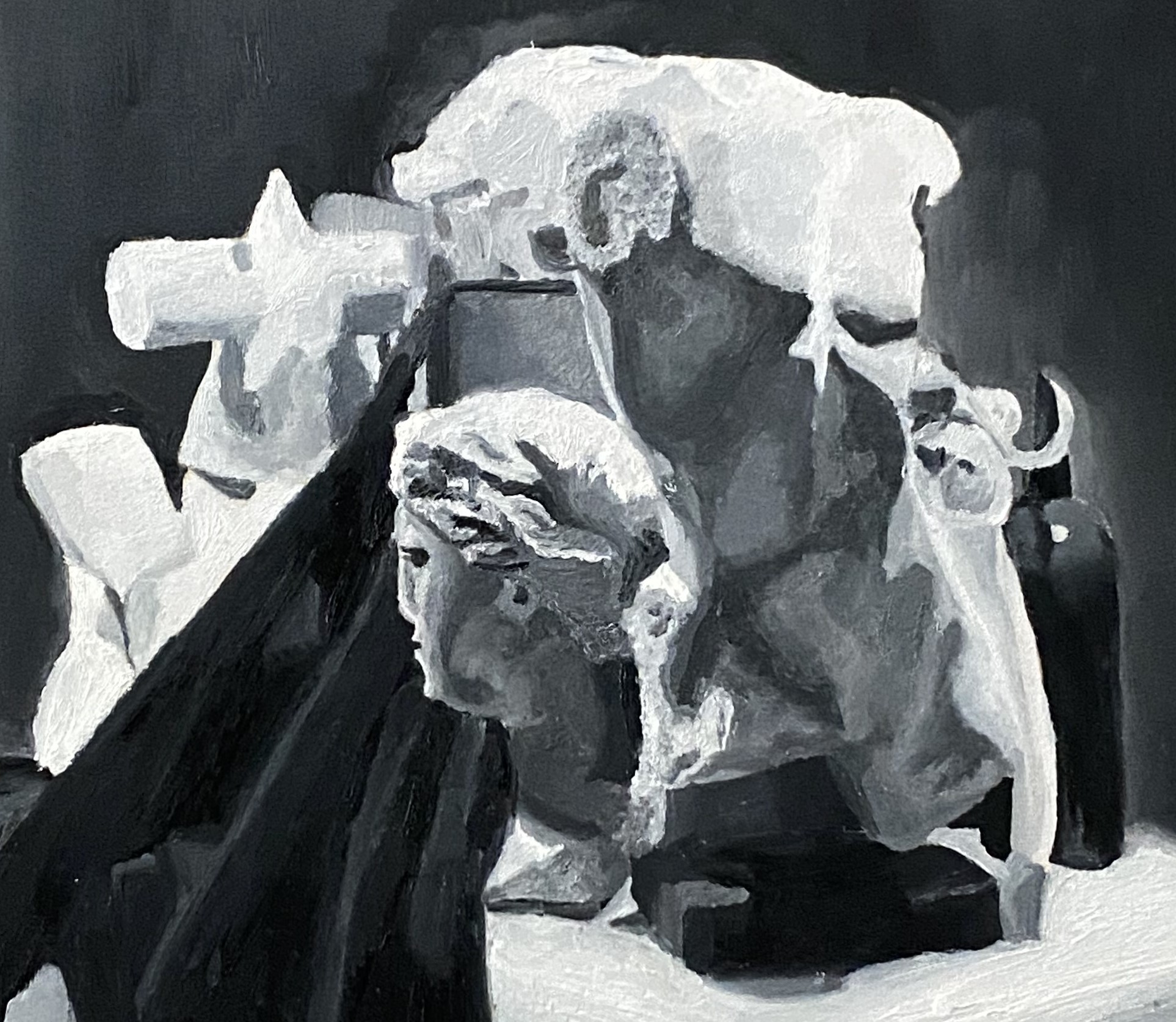
Still

Still by Denver Boxleitner

About the Author

Nathaniel Lachenmeyer is a disabled author of books for children and adults. His first book, The Outsider, which takes as its subject his late father's struggles with schizophrenia and homelessness, was published by Broadway Books. Nathaniel has forthcoming/recently published poems, stories and essays with ANMLY, Subtropics, The American Poetry Review, Poetry International Online, The Louisville Review, North Dakota Quarterly, Red Rock Review, Reed Magazine, Blue Unicorn, Potomac Review, Permafrost and DIAGRAM. Nathaniel lives outside Atlanta with his family.

About the Artist

Denver Boxleitner is a university fine arts student whose art, fiction and poetry have been published.

One-Two Combination

By Travis Flatt

“Stand like this,” I say, and turn sideways to my stepson.

When his mother showed me the video, I wished I hadn’t asked.

The video, which one of my stepson’s friends shot on his iPhone, is of my stepson fighting in the high school cafeteria. And watching it, I’m back thirty years, watching two boys on my junior high’s football team fight in our cafeteria. Aaron Coleman bashes Mikey Whitlack’s face with a combination lock, cracking his orbital bone, splattering tiles with blood. I cheer, although I know neither of them; it’s exciting, fun.

But now, these two boys fighting on my wife’s phone—my stepson and some bigger kid—make my chest tighten. I feel breathless and panicky.

The principal showed this to my wife in a meeting I wasn’t invited to, because me and my stepson aren’t blood-related.

Now that I’ve seen it, two boys flailing wildly, King Kong haymakers, ineffective punches that slap off the shoulder; I think about my dad, and technique.

My dad took me to a boxing gym downtown once, but when we saw how much older (and rougher) the other boys were, we never went back. My dad learned how to throw a one-two combination in college gym class, and was proud he knew how. Taught me when I was in, maybe, fifth grade.

I’ve never been in a fight. Neither had he.

In the garage, where I hung a heavy bag I bought this afternoon on the way home from work, I stand with my stepson, who I had to drag away from the Xbox—the Xbox where, up until a year ago, we played Minecraft together for hours.

“Stand like this,” I say, again. He frowns, stays standing straight on, shoulders squared with mine. He’s taller. And handsomer. Like his real dad.

“Why?”

“So you’re a smaller target.”

“I know,” he says.

“Do you know how to box?” I say, getting frustrated.

“Yes,” he says, likewise annoyed.

I know that he doesn’t. I don’t want him to fight. It’s just the principle of the thing.

“Hit my hand,” I say.

Half-heartedly, he jabs my hand, then makes to walk inside.

“I bought this bag,” I say, “to show you a one-two combination.”

He says, “Mm-hm,” walking.

I follow.

“My dad,” I say, chest tightening at that word, “taught me how to throw a one-two. It’s easy.”

“I know how,” he says. He opens the door to the kitchen.

“Then why didn’t you do it yesterday?” I say, and, of course, wish I hadn’t. Low blow. One point deduction.

Two years ago, I taught him to draw Iron Man. He’d told me he was swapping drawings with his girlfriend. A girlfriend he hadn’t even told his mother about. Now we might go two weeks without talking, except grunts in the hallway for “Hello,” or, “Excuse me,” when squeezing past each other.

“I did,” he says, halting and looking back. “My dad taught me how to fight,” he says, and shuts the door in my face.

About the Author

Travis Flatt (he/him) is an epileptic teacher living in Cookeville, Tennessee. His stories appear in Fractured, Variant Lit, Prime Number, Gone Lawn, Flash Frog, and other places. He enjoys theater, dogs, and theatrical dogs, often with his wife and son.

mahogany

By Justis Ward

The head of our daughter crowns, pressing out into the white-walled hospital room. I scream. Something guttural. Something animal. And my strong-as-mahogany husband grips my hand, his fingertips digging into my palm, breaking through my concrete pretense. “Almost there,” says the white coat. “Just a little more.” According to him, this is the worst part. But he’s wrong.

Her shoulders rip me open, though I don’t feel it. I only feel him, my husband, and his strong brown fingers holding mine. And before I know it, our daughter is with us. Weak, wishful, wanting. The white coat places her on my chest. She burrows into me, searching for warmth, but my bosom is cold and wet. She wails. I wait. My husband just stands there. The way he always does. Because he is mahogany.

Meconium and vernix streak across our daughter’s wrinkled skin like cheap paint. Black and white, tar and wax, my husband and me. A nurse offers to wash her. Yes. No. My husband. Me. The white coat gets called out of the room, and the nurse looks… uncomfortable. Then, my husband sees her, our daughter. Her pale skin, her blue-as-ocean eyes, her hair the color and texture of duckling fluff. He sees her, and his strong brown fingers go slack. Even then, he is mahogany. Strong. Stoic. Steadfast. So, I don’t expect him to crumble, to fall, to crack his knees on the white tile floor, to do anything but stand there. Because that’s what he has always done. And maybe he would have, if only I had held him up. But I didn’t. And I never have.

So he falls, crashing through our home, dividing his side from mine, fifty-fifty, while his questions puddle on the tile beneath him. And our daughter stares blankly at the gaping hole between us, where the answers to his questions live and where the truth of her life hides. She can see them. I’m sure of it. And he can, too. But strangely, I can’t. So, I’m left with only maybes. Maybe he’ll come back. Maybe he was never mahogany to begin with. Or maybe I simply deserve this. Either way, he now knows our daughter isn’t his. And he gets up. And he walks out.

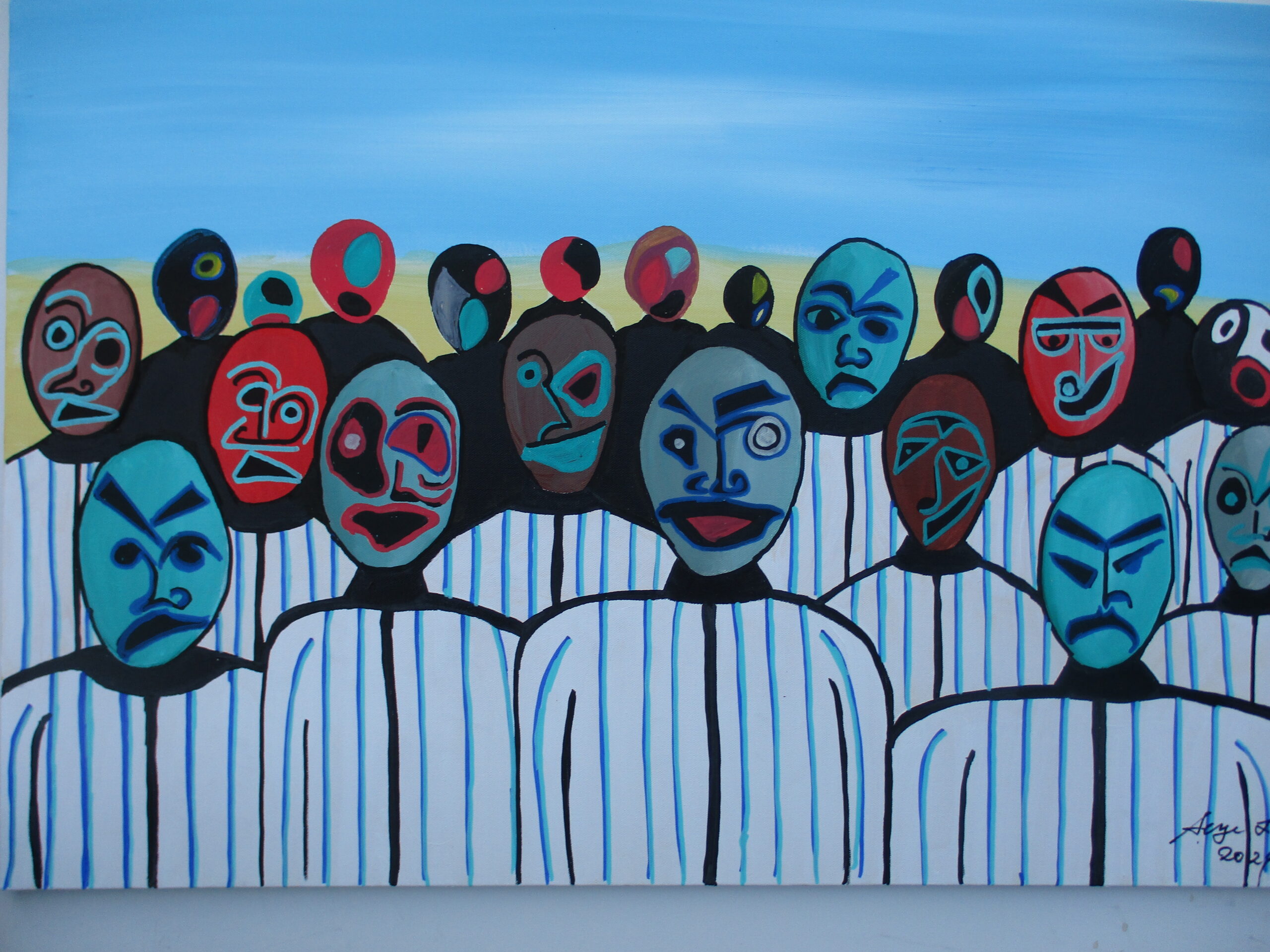
Open The Gate

Open The Gate by Serge Lecomte

About the Author

Justis Ward is a Georgia native whose writing, more often than not, speaks to the agonizing beauty of suffering. He has work forthcoming in Lullwater Review and Past Ten. He is currently pursuing an MFA in Creative Writing from Lindenwood University and hopes to teach at the collegiate level following his graduation.

About the Artist

Serge Lecomte was born in Belgium in 1946. He came to the United States where he spent his teens in South Philadelphia and later Brooklyn. After graduating from Tilden H. S., he joined the Medical Corps in the Air Force. He earned an M.A. and Ph.D. from Vanderbilt University in Russian Literature with a minor in French Literature. He worked as a Green Beret language instructor at Fort Bragg, NC from 1975-78. In 1988 he received a B.A. from the University of Alaska Fairbanks in Spanish Literature. He worked as a language teacher at the University of Alaska from 1978 to 1997.

Polaroid Snapshot: Rte 61—Graffiti Highway, Centralia, Pennsylvania

By Patrick Thomas Henry

You promise me we’re on the cusp of the real fun, despite the coyote hunting us around Centralia’s vacant, overgrown plots. The coyote has the same idea: real fun. For him. And he’s parading with half a grouse in his jaw.

Something smells like cordite, spent shotgun shells. The underground mine fire, maybe. Burning in Centralia since the 1960s, when someone purged a garbage dump with kerosene, so it wouldn’t reek for Memorial Day. But the fire burrowed into the abandoned mine tunnels, caught a coal seam. By the ’80s, the earth was collapsing and the government was razing the lots.

Now there’s knee-high grass, wild turkeys, grouses, the odd rat. We pass a pair of squirrel skeletons, a robin skull, a roadkill jay. No stray cats—happy hunting for other predators.

The coyote whimpers. He’s still loping after us, grouse-in-jaw.

I say, “You and Balto have the same smirk.” You adjust your backpack and fang some words about the sandwiches and the Thermos of iced tea you’ve packed for us.

The coyote stalks us to an embankment at the edge of St. Ignatius Cemetery. There, steel pipes emit smoke from the smoldering coal vein. The ground could give at any minute. You offer me a sandwich. That’s when you say it—that you brought her here, the one I’d “replaced.” I shove your shoulder. You try the sandwich again. But I’ve already started climbing, scrabbling the embankment. The earth gives in my fingers, the texture of dryer lint.

You crest the knoll before I do.

When I make it, you’re already pointing to something. A turkey carcass, its ribcage fileted open, festers beside a rock. Someone spray-tagged the stone with pink block letters: Help. Whiffs of sulfur, meaty as truck-stop egg salad, feather the air. We’re two Lycra-upholstered souls watching the burning heart of earth wheeze. You slap my forearm with one of the flaccid sandwiches. “C’mon,” you say. “Oven-roasted turkey. Spicy mustard. Pepper jack. Your favorite.”

Her favorite. But I take the turkey sandwich. Our hands graze. I strip the sandwich of its cellophane, drop the wrapping. The mustard burns my chapped lips and I imagine the coyote slurping marrow from the grouse’s bones. Steam seeps from the fissures in Old 61, the pavement bright with neon tags left by tourists like us, and I imagine you drive-shafting into the earth, into the slow-cooker hell of the endless seam of coal, and me leaving you there.

About the Author

Patrick Thomas Henry is the author of Practice for Becoming a Ghost: Stories (Susquehanna University Press, 2024), which was long listed for The Story Prize. His work has previously appeared in Denver Quarterly, West Branch Online, Carolina Quarterly, North Dakota Quarterly, and elsewhere. He currently teaches creative writing at the University of North Dakota, where he also directs the annual UND Writers Conference. He also serves as the fiction and poetry editor for Modern Language Studies.

Meadville

By Sean Dougherty

Tony wanted to punch the guy wearing the shirt from the local college when he insulted Dina the bartender but I said Dina could handle herself, and she told them next time its last call for you. The young guys are eyeing the girl playing pool who has unbuttoned her collared shirt to the navel to show off her ample bosom, but I tell them to calm down and I’m pretty sure she doesn’t like boys, with her short hair and tattoos, she’s Butch and I buy her a whiskey and whisper to her, I know you can handle yourself sister but maybe tell her friends to bring it down.  And she just nods a thanks, and I go back to sipping my Jack and Coke. Now the boy with the college shirt is posturing and punching the electronic punching machine and daring the men with his high power number, and I know this is going to go bad. They already tilted the pinball machine and one of them, whose pool game is just average, sank the eight on the break and bragged and waved the five dollars he won in Al’s face. Of course he doesn’t know Al just got out of another six month stint for assault. Not the I killed someone kind of assault, just your basic I one punch knocked you on your ass kind of assault. And maybe the worst part is it’s a Tuesday night, the kind of night where everyone is just drinking slowly and quietly after working second shift, so we can sleep till we get up again. Now the college boy and his three friends have said something to Tony who has had enough and looking at the two of them this could probably be a fair fight as Tony talks big but can’t fight for shit. I’d put my money more on the Butch girl who looks like she can use a pool stick like a Karate weapon. Maybe MMA trained. Dina has stepped in and tells the college kids, it’s long past your last call.  Time to go. I tell the Butch girl, my names Hank. I can tell you grew up in places like this but your friends got to leave. She nods, says Jagoffs, I know. Her tone says maybe Conneaut, the kind of girl whose old man took her bow hunting, and these boys are big houses and Shadyside. They won’t know shit till finally they wake up one night counting stars from their backs and not knowing how they got there. They walk out giving Tony the finger and Dina and I keep everyone from following them out. Then Al kicks the pinball machine and gets it to ring again. I put a dollar in the old time jukebox, and Dina is pouring Tony a double as Lucinda Williams pours her heart out.

About the Author

Sean Thomas Dougherty's most recent book is the memoir in prose and prose poems Death Prefers the Minor Keys from BOA Editions.


How to Talk to Your Mother After the Thing That Happened in the Hospital

By Ya Lan Chang

Mutely

George says only boys wearing blue can play with him. He looks at the navy stripe on your grey shorts and says, Only light blue counts. Hotness stings your eyes. You’ll tell your mother later; Ahma said she’s leaving the hospital today. But Daddy shows up after everyone else has gone, prickles all over his chin, wearing the t-shirt he sleeps in. Mama’s resting, he says. Don’t whine, okay? Now’s not the time. Once home, you shout Mama, but Ahma patters out of the kitchen while Daddy disappears upstairs. Over dinner, Ahma strokes your hair when you tell her about George. You can play with other friends, she says. You push your dinner away, stick out your lower lip. You want to play only with George, as your mother would’ve known. Before the thing in the hospital, she’d listened all the other times George said you weren’t wearing the right colour, and wrapped you in her cocoon, smelling really nice, like flowers.   


Carefully

For Show and Tell, you bring the picture that you, Daddy, Ahma and your mother took in front of the big tower called Taipei 101 to show where you went on holiday. Mrs Fox says how wonderful, and asks whether you have a brother or sister. You look at your mother touching her round belly. I don’t know, you reply. Later, you watch Mrs Fox talk to Daddy. Watch him lower his head, cover his face. Watch her pat his back. At home, you yawp when you see your mother in the kitchen, her hands around a mug. She smiles, but it looks different from before the thing that happened in the hospital. You chatter about your new friends, new teacher, how she asked about your photo, the one in front of – Hey, let’s tell Mama about the playground, Daddy says. But why did my sis – and your mother’s chair makes a loud noise against the floor. Mama, you say, but she doesn’t look back.


Forcefully

It’s the morning of your fifth birthday. You run into your parents’ room, shouting, Yay, we’re taking the train to see the T-Rex in London! Your mother’s curled up on one side, duvet pulled tight around her. Daddy’s in front of the bed, hands on his waist, staring at your mother, unsmiling. Mama’s not coming, he says. You freeze. Something rises up in you, making your heart gallop. You ball your fists, stamp your foot. No! It’s my birthday! I want Mama to come! You dash to her, yank off the duvet. This is so unfair! It’s my birthday! I want you to come! It’s been a gazillion years since the thing in the hospital. I want you to come! and you throw yourself at her, clinging to her as if she’d evaporate. I want you! and her cheek and ear are damp. I want you! and you feel her trembling, shuddering. I want you! and Mama tightens her arms around you, melding into your cocoon.

The Red String

The Red String by Kiera Fisher

About the Author

Originally from Singapore, Ya Lan Chang (Yalan) lives in Cambridge, United Kingdom with her husband and son. Her work has been published in The Argyle Literary Magazine, SoFloPoJo, Northern Gravy, Every Day Fiction, Litro Magazine, Cha: An Asian Literary Journal, and Quarterly Literary Review Singapore. She works as a law lecturer and is a writer at heart.

About the Artist

Kiera Fisher is a Columbus-based muralist/mixed media artist who embraces bold colors, and imagery to create art inspired from her surroundings; incorporating her lived experiences into her work, which frequently depicts figures and their relationship to people, places and things.

My Dad

By Roger D'Agostin

I asked Darrel at the diner. 

“My mom went food shopping in her nightgown,” he answered.  “My dad got lost and we had to call the police.  It’s funny, you convince yourself it’s not what it is.  I don’t know how.  I mean, she went to the grocery store in her nightgown.  Not even a robe.  My dad got lost in the neighborhood he’s lived in for forty something years.  It’s like their dementia triggers some chemical reaction in your brain.”

“I think my Dad’s in the early stages.”  I lied.  He hasn’t gotten lost or left the house in his pajamas but he doesn’t know who I am.  I’m also pretty sure he can’t read although he’s been reading the newspaper for the last two weeks.  My sister thinks he’s reading the same paragraphs.  I think he just stares and this makes him tired. 

“How did you tell them?” I ask.

“I didn’t.  I mean I couldn’t.  I couldn’t get myself to explain to them what was happening and I waited, trying to figure out what to do, but then it was too late.  My mom complained about static in her head.  Said she’s in between channels.  Then everything that made her her, left. 

Dad, he became confused and anxious and then angrier and angrier.  He threatened the neighbors with a shovel; walked up to their house in the middle of the night and demanded they leave his house.” 

He stops.  I’ve heard everything he’s told me before. 

Fortunately, Dad doesn’t threaten people.  Nor does he leave the house in his pajamas.  The past two weeks he’s actually been wearing suits.  That’s new.  I remind him while he’s getting dressed that he’s working from home today and he should get the newspapers off the driveway and see what happened in Asia. 

He starts reading in the kitchen.  After his cup of coffee I tell him the light’s better in the living room which is another lie.  He dozes.  I wake him for lunch and take him to the diner.  This would be a perfect time to tell him.  Or at least begin to tell him.  But we never get past the part where he talks about his parents and their mental descent.  I’ve never heard these stories.  He tells me over and over as if he’s really trying to tell me something. 

Interstice

Interstice by Jennifer Weigel

About the Author

Roger D'Agostin is a writer living in Connecticut. His most recent work has appeared or is forthcoming in Dunes Review, Bookends Review, and Assignment Literary Magazine.

About the Artist

Jennifer Weigel is a multi-disciplinary mixed media conceptual artist. Weigel utilizes a wide range of media to convey her ideas, including assemblage, drawing, fibers, installation, jewelry, painting, performance, photography, sculpture, video and writing. Much of her work touches on themes of beauty, identity (especially gender identity), memory & forgetting, sociopolitical discourse, and institutional critique. Weigel’s art has been exhibited nationally in all 50 states and has won numerous awards.

© 2025 DREXEL PUBLISHING GROUP 
All Rights Reserved

3141 Chestnut St.
Philadelphia PA 19104